What if the face you see in photos could match the balanced, rested version you feel inside, without changing your features, just the way your muscles pull on them? That is the quiet promise of Botox when it is used not just for lines, but for proportion and harmony. The work is subtle. It trims overactivity, tempers dominance, and nudges soft tissue into better alignment with bone structure. Done well, it looks like you finally slept, exhaled, and put your best angles forward.
I approach Botox as an instrument, not a filter. Muscles draw, lift, flare, and compress. Over time, strong patterns show up as resting expressions that do not reflect your mood: a resting angry face from frown dominance, a tired looking face from brow heaviness, a stressed appearance from jaw clenching. These are muscle stories. When you change the way those muscles fire, you change how light falls on the face and how others read you. The art is in dosing and placement, and in knowing when to leave a muscle alone.
What proportion means on a living face
Proportions are not math alone. The classic facial thirds and fifths are helpful, but muscles make a face dynamic. An over expressive forehead can lengthen the upper third visually. A downturned lip corner can make the lower face look heavier than it is. Even a nasal flare can widen the midface in motion more than at rest. Botox for facial proportions lives at the intersection of static balance and dynamic behavior, targeting overactive facial muscles without dulling expression.
When I evaluate a face for harmony rather than just wrinkle softening, I watch it move. I track the patterns that hijack proportion: repetitive facial movements that carve habits, uneven muscle pull that tilts brow or smile, facial muscle dominance that steals symmetry. Then I choose conservative points to produce controlled facial movement, not paralysis. The aim is youthful facial motion with cleaner lines and a calm baseline.
Upper third: forehead, brows, and the illusion of length
The forehead sets the stage for perceived length. Heavy vertical frown lines and deep horizontal forehead creases are not only signs of muscle overuse; they also change how high the features seem to sit. So does the brow shape. A flat, heavy brow can shadow the eyes and make the upper third feel long and tired.
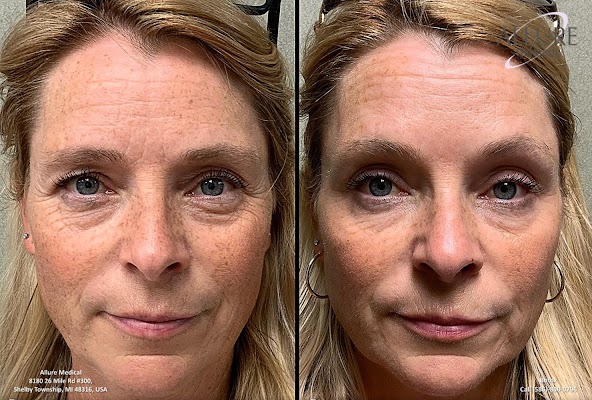
I often address three levers here: frown habit correction, tailored frontalis treatment, and brow balance. The glabellar complex (corrugators and procerus) drives the resting angry face for many people. Softening it reduces the scowl signal and helps with facial relaxation. For the forehead, tiny units placed higher than you think, with spacing that respects individual muscle bands, can ease lines without dropping the brow. This is where experience matters. Overtreat the frontalis, and you create eyebrow heaviness that narrows the eye opening appearance. Undertreat it and the over expressive forehead keeps pulling, creating dynamic wrinkle control problems.
Subtle brow shaping is a proportional tool. A small dose under the lateral brow tail can free lateral brow support and create a gentle lift. On the right face, this lift shortens the apparent vertical height of the forehead, a forehead shortening illusion that balances the midface. On the wrong face, or with too much product, it spikes the brow or causes asymmetry. Degrees matter. A 2 to 4 unit change in one point can be the difference between fresh and surprised.
Patients often ask whether Botox can change facial expressions in a way that feels artificial, or if it affects emotions. Here is the nuance. Expressions come from muscle contraction patterns; we are modulating hyperactivity, not erasing intention. There is research exploring whether dampening frown muscles can influence emotional feedback. In practice, the more relevant impact is social: less scowl at rest means fewer misread signals. As for emotions themselves, people report feeling more like their neutral state looks. That alignment tends to reduce facial fatigue and muscle tension relief often follows.
Eye framing: opening, smoothing, and avoiding the frozen look
Eyes anchor attention. Periocular wrinkles, squint lines at the lateral canthus, and under-eye creasing can project strain. A light touch around the eyes serves three goals: eye area refresh, minimizing radiating lines, and keeping blink strength intact.
Botox can create a mild eye opening appearance by relaxing the lateral orbicularis oculi, which competes with the brow elevators. I favor low units, placed just lateral to the orbital rim, to avoid undercutting the supportive fibers that keep the lower lid snug. When someone squints habitually, I treat habit driven wrinkles enough to break the pattern without weakening function. If the cheeks are slim or the lower lids are loose, I warn about the risk of lid heaviness and stay conservative.
Brow positioning plays a role here as well. A balanced lateral brow lift can brighten the eye with minimal product. If someone wears lash extensions or frequently squints in bright light, I address lifestyle too. Sunglasses and better screen posture often do as much for dynamic wrinkles as a few extra units. None of this is about eliminating lines at all costs. It is about taking the strain off the frame so the eyes read as focused and awake rather than defensive.
Midface nuances: nose, smile, and the quiet power of tiny doses
Midface work requires discipline. Small injections can fix distracting pulls, but they can also steal character if overused. For nasal flare or nose widening in motion, carefully placed microdoses at the alar base can reduce flare, tightening the nose footprint with animation. I avoid this if someone relies on broad smiles for expressive work, as it can make a grin feel constrained. Again, proportional thinking: if a flaring nose expands the midface while the chin remains narrow, taming that motion can improve facial profile balance, especially in photos.
Smile correction and lip corner lift are delicate. The depressor anguli oris overpowers upturned corners in many faces, especially when stress increases facial tightness. Easing its pull creates a modest rise at rest that looks less stern. It also helps speech look friendlier without forced effort. When injecting near the smile elevators, I map the vectors carefully to avoid flattening the upper lip or reducing tooth show. The goal is a natural facial balance when speaking, not a staged grin.
Lower face and jawline: tension, width, and proportion from the side
Where the upper face is about light and lift, the lower face is about load and contour. Masseter overactivity from clenching relief and stress related jaw pain can square the jaw and add weight to the lower third. Botox for jaw tension relief does double duty: it reduces pain for many people and slims the face over several weeks as the muscle atrophies slightly. That change alters facial proportions in a meaningful way, especially in three-quarter view. I discuss timelines upfront. Comfort improves within days. Shape changes take 4 to 8 weeks, with continued refinement in the second and third treatment cycles.
Facial muscle retraining becomes part of the plan. If someone chews gum or clenches on deadlines, I pair injections with bite awareness techniques and, when needed, a night guard referral. It is hard to build harmony on a moving target. If the mentalis is overactive, it can bunch the chin and shorten the lower face visually. A few units to calm the pebbling smooths the transition from lip to chin and relieves the sense of facial stiffness.
Even in the lower face, restraint matters. Weakening too many depressors can blur speech or make the lower lip feel heavy. I place a premium on controlled facial movement so that the way you talk on camera remains crisp.
Symmetry as a moving target
botox providers in my areaFacial symmetry is not a static snapshot; it is how muscles pull in motion. Botox for facial symmetry correction works by quieting the stronger side or freeing the weaker one. A classic example is uneven eyebrow height where one frontalis band dominates. Another is a smile that hikes more on one side due to levator activity. The fix is rarely to fully suppress the dominant side. A small rebalancing dose, usually 1 to 3 units, can neutralize the asymmetry without creating imbalance elsewhere.
I show patients symmetry in mirror tests, then on video, because perception shifts when you move. A single still photograph can mislead. If the face is naturally asymmetric in bone, Botox can disguise it only in motion, not in rest. That honesty prevents mismatched expectations.
Expression and recognition: what changes and what does not
Concerns about botox and facial recognition changes come up more now that we all live on cameras. The face unlock on a phone looks for a blend of geometry and texture. Standard, well-placed Botox for wrinkle softening does not alter bone landmarks. It can smooth skin and reduce certain muscle shadows, which sometimes requires retraining your phone for the first weeks if the change is dramatic. For most people, it is a nonissue.
The bigger question remains: does Botox affect emotions? There is evidence that dampening frown muscles can reduce negative feedback loops, but it does not mute feelings. What I observe is a reduction in miscommunication. With less habitual frown or squint, your resting baseline reads as approachable. That shift can feel like a confidence boost because other people respond to the face you meant to present.
Skin quality and proportion: the surface tell
Skin texture affects proportion by changing how light reflects. Fine crepey skin can scatter light so that features look muddy. Targeted, microdroplet Botox techniques can improve skin smoothing in areas with diffuse, fine movement, like the crow’s feet fringe or the forehead’s superficial lines. While Botox is not a collagen builder, reducing repetitive motion lets the skin recover and can slow early aging signs from muscle overuse. As for sun damage prevention, Botox alone does not protect skin from UV. Good sunscreen does. That said, calmer muscles reduce squinting in bright light, which can reduce squint lines over time when paired with protection.
Patients who want a camera ready face notice this interplay fast. Smooth makeup application improves when the skin moves less under the brush. Foundation creasing decreases when forehead lines are softer and perioral pull is controlled. If you spend time on high definition video, this polish reads as professional appearance without looking “done.” It is the difference between buffing wood and changing the shape of the table.
Planning for events and special occasions
Event preparation is a logistics exercise as much as a beauty decision. If you want photo ready skin for a wedding or broadcast, I advise a schedule. Neurotoxin onset is 3 to 7 days, with peak at 10 to 14 days. Minor tweaks often help after the first week to address micro-asymmetries. For a high stakes date, we plan a baseline session about six to eight weeks before, then a touch-up two to three weeks prior. This allows controlled facial movement on the day and reduces risk of surprises.
Keep lifestyle factors in mind. Travel, dehydration, and stress can amplify facial muscle dominance patterns, especially clenching. Hydration and sleep will not change anatomy, but they will help the treatments read cleanly in high definition face contexts, where the camera exaggerates shine and shadow.
Dose, duration, and retraining
Typical units vary by area and face size. A small forehead might need 6 to 10 units; a strong one, 12 to 18. Glabella often takes 10 to 20. Crow’s feet can be 4 to 12 per side, tailored to smile amplitude. Masseters range widely, from 12 to 30 per side for women and 20 to 40 for men, depending on bulk and goals. These are ranges, not prescriptions. I document responses and adjust over three cycles. Most people see 3 to 4 months of effect in the upper face, sometimes longer with repeated, consistent treatments. Lower face and masseter changes can last 4 to 6 months or more, with contour improvements persisting between sessions.
The retraining piece is often overlooked. If you habitually lift brows to talk, a lighter forehead dose combined with feedback can help you break the habit. Some patients practice “soft eyes” when they read screens to reduce squint. When Botox takes the edge off a pattern, you get a window to adopt a more neutral movement. That is how gains compound.
Risks, trade-offs, and how to avoid the robotic look
No injectable is risk free. The most common side effects are short-lived: pinpoint bruises, mild headache, a heavy feeling for a few days. More disruptive issues relate to placement. Too much in the forehead can drop brows; too much around the eyes can alter smile warmth or cause lower lid laxity in susceptible faces. A stray unit near the levator palpebrae can produce eyelid ptosis. These are uncommon with experienced hands and careful mapping, but they are real. I mitigate by staying within conservative ranges at first, favoring microtop-ups over heavy front-loading. I also watch for muscle compensation. If the frontalis is quiet, the glabella may reassert, and vice versa. Harmony sometimes requires balancing three levers, not one.
People worry about losing their signature expression. The antidote is specificity. We treat the overactive regions while preserving the muscles that create your identity. A news anchor who uses brows to punctuate sentences needs different dosing than a software engineer who rarely emotes on camera but clenches at night. Thoughtful placement yields expressive control rather than suppression.
Long face versus short face: using motion to shape perception
Botox cannot elongate bones or shorten a jaw, but it can change perceived proportions. For a long face shape, reducing vertical lift in the forehead and enhancing lateral brow support can minimize the tall upper third signal. Softening mentalis dimpling can smooth the lower third, reducing apparent length. For a short face shape, a touch more open brow shape and a cleaner nasolabial region can emphasize vertical lines of light that elongate visually. These are small visual tricks, often adding up to a few millimeters of “feel” rather than measurable height.
Similarly, lateral jaw width from masseter hypertrophy can dominate a shorter face. Calming that width shifts balance toward the midface and eyes. For someone with a long, narrow face, masseter reduction may not be ideal, since it can over-narrow the base. That is where restraint and the option to skip an area become part of the art.
When Botox is the wrong tool
If the issue is volume loss or deep folds tethered by ligaments, neurotoxin cannot fill or lift. If heavy brow ptosis comes from skin and fat descent, relaxing the frontalis can worsen droop. If a smile asymmetry stems from nerve injury, Botox may camouflage slightly, but it will not restore strength. For etched-in lines at rest, Botox softens the input, but the groove may need resurfacing or filler to look younger. I lay out these limits so that expectations stay aligned with biology.
A practical way to start
If you want to refine facial proportions without obvious change, start small and stack benefits. I prefer a “signal first” approach: identify the one or two movements that most distort harmony in rest and early animation, and neutralize them modestly. For many faces, that is the frown complex and a touch of lateral orbicularis. If jaw tension dominates your lower third, address masseters first and revisit the upper face a month later. Build a map through photos and short videos at baseline and at two weeks. Adjust doses by 10 to 20 percent, not 50, and give new placements at least one cycle before judging.
Here is a concise pre-visit checklist that helps patients arrive ready and reduces post-treatment surprises:
- Pause blood-thinning supplements like fish oil and high-dose vitamin E for a week if your physician agrees, to reduce bruising. Schedule around major events, giving two weeks for results to peak and time for refinements. Arrive with a clean face and a list of medications and recent procedures. Bring reference photos where you liked how you looked, plus any that bothered you. Plan to avoid heavy workouts, saunas, and facial massages for 24 hours after treatment.
Work and camera demands: tailoring to your life
A surgeon who wears loupes and squints all day needs robust lateral support and squint control, or the habit will overpower treatment. A litigator whose eyebrows carry emphasis should keep frontalis mobility, while the glabella stays calm. For on-air talent, harsh studio lighting punishes micro-creases and crow’s feet more than frown lines. The plan changes with context.
Even in office roles, video calls create their own rules. Wide-angle laptop cameras exaggerate the lower face. Easing mentalis and small DAO doses can keep the corners from drooping during long sessions. If you present often, a mild lip corner lift and subtle brow shaping can help you look engaged without lifting your brows every sentence. The goal is a refined facial look that reads as a polished appearance, not a new face.
Maintenance that respects biology
Three or four sessions in the first year is typical when building a new pattern, then spacing to two or three as habits break. Rushing to longer intervals can let muscle memory rebound, bringing back old creases. Pair care with sunscreen, skincare for texture, and simple posture habits that reduce squint. If you grind, deal with it. Botox will help, but clenching relief is part behavioral. When treatment and behavior align, you get durable, natural facial balance.
What success looks like
You look like you, on your best day, more of the time. The forehead is calm without being blank. The eyes sit open and welcoming, not startled. The nose does not flare wide in laughter, yet the laugh still lands. The corners of the mouth rest neutral or slightly upturned. The jaw feels less tight, headaches ease, and you stop catching your reflection mid-scowl. Makeup glides. Photos need fewer retakes. Colleagues ask if you rested, not where you went.
That is the quiet power of Botox for facial harmony improvement. It is not about youth as a number. It is about proportion, expression, and control. It is the comfort of knowing your face reflects how you feel and the roles you play, from daily work to special occasions, with a level of polish that holds up in person and in high definition.
Common questions I hear, answered plainly
Can Botox change facial expressions? Yes, but the goal is to refine, not erase. We target overactive patterns so your neutral face reads neutral. Your ability to smile, frown, and emote remains when dosing respects function.
Does Botox affect emotions? It can reduce the muscle feedback associated with frowning, and some people feel less trapped in a scowl loop. It does not prevent feeling or expressing emotions when placed carefully.
What about facial recognition on phones? Most people see no change. If your upper face transforms dramatically in a single session, you might need to retrain Face ID once. Geometry remains the same.
Will I look stiff? Not if the plan prioritizes controlled facial movement. Stiffness comes from chasing every line or using one-size-fits-all dosing. We do neither.
How soon before an event should I book? Aim for six to eight weeks before, with a small touch-up two to three weeks prior. That timing gives peak effect and room for fine-tuning.
How long does it last? Upper face effects last around three to four months, sometimes longer with consistent care. Masseter slimming can persist beyond four to six months, with contour benefits compounding over cycles.
Final notes on craft and restraint
Botox is a muscle medicine used for an aesthetic purpose. That dual identity is why it works so well for proportion. When we dial down overuse, the face relaxes into its architecture. When we respect the architecture, the adjustments read as you, only more deliberate. The craft sits in small numbers, measured hands, and the patience to watch how a face settles before pushing further. If you start with that mindset, harmony follows.